


Mental Health In The Creative Industries

Mad Artists: Creativity and Mental Health
Mad Artists: Creativity and Mental Health
The tortured artist, the alcoholic painter, the melancholic writer, the drummer with a weed habit, the bipolar entertainer, the self-destructive singer, the dancer with the eating disorder, the raging actor: stereotypes?
There are examples in the media all the time. But do you have to be unhinged to be creative?
Is the world telling us that if you choose the path of the artist, you’re different; you have to be mad, drunk, self-loathing, reckless or high?
“You are not a beautiful and individual snowflake” FightClub
Sorry to disappoint you, but these problems aren’t part of being creative any more than they are for the rest of society. Roughly 5% of the UK population experience ADHD and 3% experience Autism. Between 2-4% of UK adults use cocaine. 55% of men and 42% of women drink alcohol weekly.
7% of the UK population experience working in the UK creative industries.

Many people experience mental health issues at some point in their lives (one in four). Just do that now if you’re in a room full of other people – look around the room and count.
‘I’m too perfect, ‘til I show you that I’m not.’ Lola Young ‘Messy’
So before you open your case of laudanum, or pour yourself another absinthe (dear), spare a thought for the anxious, alcoholic, drug-abusing, OCD-suffering postman, market researcher, call-centre worker, or shop assistant who is just as prone to issues as the artistic genius.
Self-Harm is not a sign of genius. Another glass of wine is not ‘part of my creative process’. ‘I’ve always been a bit odd’ is not a positive affirmation of creativity.
If we release the need to be damaged, and get on with being creative, our output increases. I'm certainly not saying that creative people aren't allowed to have mental health issues, just that it isn't the price you pay for creativity.
To paraphrase Julia Cameron: it’s okay to be a sane, productive, happy, successful artist.
If you’re not completely happy with that idea, here’s some potential ideas about why:
“You take the red pill, you stay in Wonderland, and I show you how deep the rabbit hole goes” The Matrix
Like everything in the mind, there’s no single answer. And this article has a size limit!
Having said that creativity isn’t correlated with mental health issues, I should highlight that the life of the creative person has a lot of trapdoors built in that can make it easy to fall down a rabbit hole.
Carl Jung’s theory of Archetypes highlights that the creative ones are often considered tricksters as new thoughts upset the status quo. The new idea frightens the territorial tribal chiefs, upsetting the balance of power. So creatives are often made to feel different in childhood, and that ‘difference’ gets amplified as you get older (it has to or it can’t support the emotion attached to the childhood belief).
Beliefs from childhood about creativity being dangerous, insane, or valueless (just for fun) might be called dysfunctional assumptions – for example; the idea that you can’t make money from art, that it’s not a serious profession, that creativity comes from pain, can stop you from being a talented, happy, successful artist.
But it’s not all childhood. There are systemic issues within the creative working environment which often support the dysfunction. Solitude, long working hours, cliques, freelancing (no work, no money), boom and bust productivity (so there’s always a party, drugs, sex, alcohol, etc.), and pressure from the ‘patrons’ to deliver. The trappings of success can be as damaging as the struggle to produce.
‘I wanna be sedated’ The Ramones
The creative head is full of ideas, your mind is over-stimulated, and you have trouble switching off. Ideas are coming unbidden to your head and they’re compelling; if you have the materials and skills, you can create. If however, those ideas and compulsions become too much, you’re tired, or you don’t have the discipline and focus from formal artistic training, or the skills and materials, then all you have are compelling thoughts.
That’s pretty much the experience of an OCD. An Obsession (unbidden thoughts), which leads to a behaviour (Compulsion) and if it starts to interfere with your life or others it becomes a Disorder. That’s not a clinical diagnosis, just how it can feel.
So what can we do?
“You can’t handle the truth” A Few Good Men
First, you employ a therapist with a great deal of experience of creative… oh right, you want the one where you don’t have to pay me?
There are things you can do yourself:
1) Watch for thoughts that don’t serve you: If you find yourself thinking anything but ‘I’m an intelligent, creative person, the world is full of fun and opportunity, and others are helpful’ then you’ve got some less useful thinking in there. Mindfulness is half the battle- giving yourself space to allow your thoughts and to decide whether you want to believe them (they are merely thoughts- reality is based in actions).
2) Accept that creativity is limitless and that you have limitless options in the ways you behave because you’re creative.
3) You’re good enough and you deserve to be happy as an artist. If part of you is saying ‘no’ to that statement then your issues are bound up in a negative core belief. It’s a flat world theory. Seek opportunities to prove it wrong.
4) Emotions, Thinking and Physical States are linked. Change one and you change the rest. Look after your body, and make sure that you experience beauty and profound things every day and that will impact on your thoughts. Yes that does mean going outside once in a while.
5) Craft. This is another word for work. You’ll have spotted that. But don’t let it put you off. If you have to, call it The Craft, or The Work. And this is how it works…
“I only write when I’m inspired, and I make sure I’m inspired every morning at 9 a.m.” Peter De Vries
When you are doing the work, you know you are doing the work. There’s no lying to yourself. The work takes place when you’re imagining, planning, writing down, typing up, etc. It’s a state of immersion in the creative process.
The rest of the time, you’re a person who has to feed and nurture the creator with ideas and experiences, and rest the creator so that they can Craft every day. So get exercise, and sleep, and the right foods for genius, or you’re blocking your creator and the Craft won’t happen.
Creatives create. Output is a sign of a creative life.
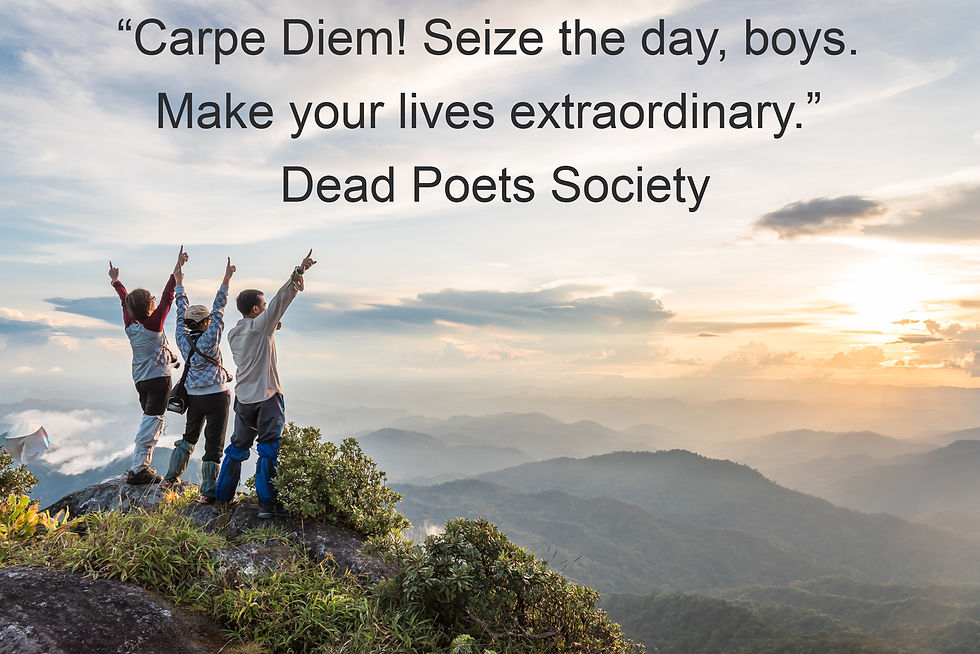
We have free will.
The philosopher Kierkegaard called anxiety ‘The Dizziness of Freedom’. He believed that anxiety exists as a result of having a choice. Or too many choices.
We can choose.
Once we choose a path all the other options not chosen fade, and this reduces anxiety.
We don’t have to have a default photo on our phone screen and we don’t have to be a person that’s purely a response to our environment and experiences- the default person. We can, instead, live on purpose.
To paraphrase the beautifully written line from the ever-so-slightly dodgy Sucker Punch:
‘Who sends monsters to kill you, and at the same time sings that you will never die? Who decides why you live and what you’ll die to defend? Who chains you? And who holds the key that can set you free… It’s You. You have everything you need. Now create!’
About The Author
James Elder MBACP is a therapist and psychological coach who has thousands of hours of clinical experience working with creative people, leaders, and businesses. As a former lecturer, teaching counselling at degree level, and as the Head of Clinical Practice for an international remote counselling service, he spreads his time between client sessions, seminars and talks.


Comments